
40th Anniversary of ASF-IWA
If I remember correctly, it was April 1966 when my father informed me that he had received a letter from a certain Antonio Jiménez Cubillo, who lived in Sydney.
This was the young man Jack Grancharoff, also a Sydney resident, had referred to, whom we met when we participated in a meeting of Italian anarchists in Melbourne during February of that same year.
And so began the contacts with the groups of Spanish anarchists in both cities. We received at least one letter a week from Antonio, and once the “Spanish Democratic Center” was established and the publication of the magazine “El Demócrata” began, the correspondence received increased, and each month, the small packet with the magazines arrived for distribution.
I met Antonio personally in September 1968 when I had to attend a conference held in Sydney. This meeting was the beginning of a friendship and propaganda collaboration that lasted until his death.
Vicente Ruiz (son)
July 19, 2025
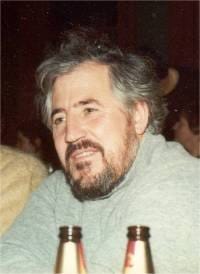
The son of a Republican imprisoned under Franco, Antonio Jiménez Cubillo—Tony, as his Australian comrades called him—was born in Madrid on June 13, 1935. He began working at the age of 12, first in the hotel industry and then in a mechanic's workshop repairing trucks.
After completing his military service in Spanish Morocco, he emigrated to Australia in June 1960, traveling through two of the eastern states where he held various jobs. In Queensland, he worked as a sugarcane cutter and a miner. Shortly after, he decided to move to New South Wales, taking a job at a foundry in the city of Wollongong, which he held for only a few months. It was in this city that he learned they were looking for workers for the Snowy Mountains project and decided to leave at the end of 1960 for what was then the small town of Cooma, finding employment on the project until the beginning of 1966.(1)
During this period he met several veteran Spanish anarchist militants who had come from France during the 1950s. Through frequent nighttime conversations with these individuals, and particularly with José Cuevas, who regularly gave him the newspaper and magazine "Tierra y Libertad" (from Mexico), Antonio declared himself an anarchist in 1961, beginning a life of struggle against all forms of injustice.
When he had several consecutive days off, he took the opportunity to spend them in Sydney, making contact with other Spanish emigrants and initiating contact with the “Sydney Anarchist Group”.(2) He developed a friendship with several of these activists, including Alex Boneff, George Christoff, and Jack Grancharoff, the latter being the editor of the anarchist magazine 'Red and Black'. It was in this basement that he also made contact with various university anarchist groups and the unforgettable Colin Pollard.(3)
His personality made it easy for him to befriend various groups of Republican exiles who arrived in Australia after passing through France and countless Spanish families who emigrated seeking economic improvement and freedom of expression.
At the beginning of 1966, several of these Spanish groups exiled in Sydney proposed establishing "The Spanish Democratic Center" in that city. This was made possible through a very fragile alliance between Republicans, Socialists-UGT members, and CNT-FAI members. This delicate work was carried out by Antonio Jiménez Cubillo. After several meetings, an agreement was reached in August 1966, formalizing the center in Sydney, and in 1968 a sub-delegation was created in Melbourne.
I take this opportunity to give due recognition to the educational and promotional work carried out by this group of Spaniards on the other side of the world. It is well known that many professors, sociological research groups, political parties, and even some labour unions are currently interested in investigating the cultural work carried out by Spaniards who were forced to emigrate from 1939 until the restoration of the monarchy in Spain following the death of the dictator Franco.
Most of these investigations are based on the activities carried out in the countries with the highest concentration of political exiles and economic migrants, and rightly so. These countries were primarily France, Switzerland, Germany, England, Belgium, the Netherlands, Sweden, the United States, Mexico, Argentina, Venezuela, and all the other countries of South America where the Spanish people found refuge and economic relief.
In all these countries, a wave of publications and cultural centers emerged, keeping alive a tradition of social development. And of course, this was achieved through the personal sacrifice of the individuals themselves. These centers were not the "House of Spain" or the entertainment club funded by the Spanish government through the Embassy or the Spanish Consul.
These organisations, cultural centres, or groups of people opposed the popular Spanish image of clapping, bullfighting, and football—an image that the Spanish authorities wished to project in order to attract foreign tourism to the Peninsula while the people starved and had no choice but to emigrate.
This cultural and literary explosion also occurred in Australia, through the Spanish Democratic Centre of Sydney.
In mid-1967, a monthly bulletin entitled “El Demócrata” (The Democrat) began publication with a print run of 1,000 copies, distributed free of charge throughout Australia. It also became known in many other countries with Spanish immigrant communities. The typesetting was done using typewriters owned by the families of Enriqueta Rodríguez, Juan García, and Antonio Jiménez, and then printed on a small Gastetner press owned by Antonio. Antonio contributed regularly to the publication with articles and poems.
In 1967, he was responsible for the English publication of Peter Kropotkin’s pamphlet “For Young People,” a booklet distributed throughout the continent and to various universities. At the beginning of 1970, Antonio published in English the pamphlet “Looking Back After 20 Years in Jail,” a compilation of the pamphlet published in England by the “Black Flag” group. It included an interview with Miguel García, author of the book “Prisoner of Franco.” On the occasion of the May Day celebrations in 1970, the Spanish Democratic Center, promoted by Antonio and Juan García, published in English the pamphlet “This Man Is in Jail for Defending Your Freedom.” A 14-page booklet, distributed in all the capital cities of the Australian continent during the May Day demonstrations.
On December 30, 1970, in response to the Burgos Trial, several demonstrations were organized in various Australian cities, with leaflets distributed in the streets of Sydney, Melbourne, and Canberra. In Sydney, approximately 100 protesters gathered at the Spanish Consulate. Antonio was one of 20 protesters allowed to enter the Consul's office to submit a petition condemning the trial.
In the 1970s he was also a frequent contributor to the anarchist magazines published in Melbourne, 'Nosotros (1972-1975) and 'Acracia' (1972-1992), the latter being the bilingual organ of the Anarchist Black Cross from 1973 to 1975.
During these years he was very active in protests against the Vietnam War, against the Greek dictatorship, against South African Apartheid, and against nuclear energy, participating in the unforgettable anti-nuclear demonstration in Sydney in 1984. And naturally, his presence was indispensable at all May Day demonstrations.
He was one of the driving forces behind and helped publish the bulletin 'Anarchy', which was published (in English) in Sydney (14 issues, 1970-1972).
In 1974, Antonio spearheaded the publication of 'Militando' magazine, an anarchist publication in Spanish that, although short-lived (2 issues), represented collaboration between the various Spanish and South American anarchist groups based in Sydney and Melbourne. The two published issues were printed at the workshops of the anarchist printing collective Slash/Asterisk* in Melbourne.
A contributor to all the libertarian press of the Spanish exile community, he also developed and maintained contact with Cuban libertarians in exile and was the Australian correspondent for the magazine 'Guángara Libertaria', published in Miami, Florida, United States. He corresponded with countless exiled comrades, including Campio Carpio and Germinal Gracia Ibars, better known by his pseudonym Víctor García. He also served as the Australian correspondent for the magazine 'Ruta', published in Venezuela.
Antonio initiated the 'La Semilla' Collection of publications. Under this collection, three pamphlets were produced: In 1975, 'The Anarchists and the Social Revolution', a report—prepared through correspondence in the early 1950s—from Comrade Campio Carpio to Comrade Salvador Torrent, who resided in Innisfail, Australia. This report was previously published in issue number 11, November 1951, of the magazine 'Cenit', published in Toulouse, France. The publication of this pamphlet was made possible through the cooperation of the Spanish-speaking groups Militando of Sydney and Ravachol of Melbourne, and it was printed at the Ravachol Press collective's workshops in Melbourne.
In 1978, 'Interludio Ibérico', a work by Campio Carpio, Silvia Mistral, Bartoli Molins, and Fabraga, recounted the experiences of the exodus and the concentration camps suffered by Spanish refugees. This publication was produced with the layout work done by Antonio and the support of the small group of Spanish anarchists in Sydney.
In 1984, Antonio published the pamphlet 'The Reivindicative Art of Castelao', written by Campio Carpio. This pamphlet also includes 14 sketches drawn by the artist Castelao, reflecting the atrocities committed in Galicia by fascist forces. All the typographical work was done by Antonio and then printed by the Monty Miller Press collective in Sydney.
In 1976, he was one of the founders and driving forces behind the Federation of Australian Anarchists (FAA) until its dissolution in 1978. He was one of the instigators of the anarchist bookstore Jura Books Collective, which opened in August 1977 at 417 King Street, Newtown, Sydney. He participated in preparing the shelves, painting the premises, and maintaining its cleanliness, dedicating many weekends to these tasks. From 1982 onward, he contributed countless hours ensuring the bookstore was open to the public.
Throughout these years, Antonio was an important figure within the Australian anarchist movement, promoting the ideas of anarcho-syndicalism, the International Workers' Association, and the need to establish an anarcho-syndicalist organization on the continent. As one of the participants in the conference held at Jura Books on January 27, 1986, the Anarcho-Syndicalist Federation (ASF) was formally established. At the end of this conference, all those present recalled Antonio's words: "I have waited 25 years for this day." And naturally, at the conclusion of this conference, Antonio was elected to one of the positions on the ASF's Intercontinental Secretariat.
From May 1 to 4, 1986, he participated with Mariano Sussiac and Vicente Ruiz Gutiérrez in the commemorations dedicated to the "Centenary of Anarchism in Australia," held in Melbourne. Events in which a good number of local and international anarchists participated, including Marianna Enckell from Switzerland, Miura Seiichi from Japan, Ha Ki Rak from Korea, Phillipe Pellitier from France and Diego Camacho from Spain (better known by his pseudonym Abel Paz).
In 1987, Antonio proposed the publication in English of Frank Fernández's work, "Cuba: The Anarchists and Freedom," originally published in Spanish by Guángara Libertaria. The first English edition was printed by the anarchist collective Monty Miller Press in Sydney. Antonio Jiménez Cubillo died suddenly in Sydney of a heart attack on July 14, 1990.
(1) The Snowy Mountains Project refers to a hydroelectric and irrigation system located in Kosciuszko National Park in southeastern New South Wales, built between 1949 and 1974. It included 16 main reservoirs, seven power stations, and 225 kilometers of tunnels, pipes, and aqueducts. The project employed over 100,000 workers, most of them European immigrants. The construction of these tunnels was a particularly dangerous and difficult task, carried out in harsh conditions, battling cold and rain, with risks including roof collapses and explosions, resulting in the deaths of 121 workers due to industrial accidents.
(2) The Sydney Anarchist Group was established in 1956 by a group of militant exiles from the Bulgarian National Confederation of Labor (CNT). This group founded the famous “Anarchist Cellar” in the early 1960s in the basement of a tailor's shop located on the corner of Glenmore Road and Darlinghurst Road, in the Paddington neighborhood.
(3) Colin Pollard was one of the main promoters of Esperanto within the Australian anarchist movement. During the May Day demonstration in Barcelona in 1979, he and Miguel García distributed the pamphlet "Esperanto and the CNT."